
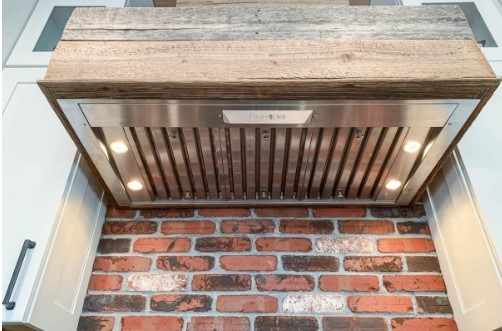
Professional-grade cooking demands ventilation that can handle high heat, smoke, and grease without compromising comfort. In many upscale renovations, a 48-inch range vent hood becomes a central performance feature rather than a decorative afterthought. Designed to pair with large pro-style ranges, this ventilation size supports powerful burners and continuous cooking sessions. Homeowners investing in premium appliances must also evaluate airflow capacity, duct design, filtration systems, and noise control. Selecting the right configuration ensures consistent indoor air quality, protects cabinetry, and preserves long-term kitchen durability while maintaining a refined aesthetic.
Understanding Why Size Matters in Pro-Style Kitchens
Pro-style ranges typically measure 48 inches wide and often feature multiple high-BTU burners, griddles, or dual ovens. These appliances can produce significantly more heat and airborne grease than standard residential cooktops. A properly matched 48-inch range vent hood ensures full coverage across the cooking surface, capturing smoke and vapor before they spread throughout the room. Industry guidelines generally recommend a hood that is at least as wide as the range, and in some heavy-duty cooking environments, slightly wider for optimal capture efficiency.
Beyond width, mounting height also plays a crucial role. Most manufacturers recommend installing the hood between 30 and 36 inches above the cooktop, depending on blower strength and ceiling height. Improper sizing or placement can reduce capture efficiency and increase strain on the motor over time.
Airflow Capacity and CFM Requirements
One of the most critical performance indicators is cubic feet per minute (CFM), which measures how much air the system can move. Professional-style gas ranges often exceed 60,000 BTUs, requiring stronger ventilation to maintain air clarity. Many experts suggest calculating minimum CFM by dividing total BTUs by 100, although cooking habits and kitchen layout can influence final requirements.
A high-capacity 48-inch range vent hood typically ranges from 900 to 1,200 CFM or more, especially in open-concept kitchens where smoke disperses quickly. However, higher airflow must be balanced with proper duct sizing. Undersized ductwork restricts airflow and increases noise. In some regions, building codes may also require make-up air systems when installing high-CFM ventilation to maintain indoor air pressure balance.
Ducting Design and Ventilation Efficiency
Ducting configuration significantly affects performance. Straight, short duct runs with minimal elbows allow air to exit efficiently. Excessive bends, long horizontal runs, or restrictive transitions can reduce airflow effectiveness by up to 30 percent. When installing a 48-inch range vent hood, selecting the correct duct diameter, often 8 to 10 inches for higher CFM systems, is essential for maintaining rated performance.
Exterior venting remains the most effective solution for pro-style kitchens, as it removes heat, moisture, and combustion byproducts completely from the home. Recirculating systems with charcoal filters may be acceptable where ducting is not possible, but they are generally less effective for heavy-duty cooking environments.
Filtration Systems and Grease Management
High-output cooking generates grease particles that can accumulate in cabinets and on walls. Quality ventilation systems typically include stainless steel baffle filters designed to trap grease while allowing consistent airflow. Baffle filters are preferred in pro-style environments because they are durable, dishwasher-safe, and engineered for high heat.
In a premium 48-inch range vent hood, commercial-grade baffle systems often outperform mesh filters, particularly during frequent searing or frying. Regular cleaning maintains airflow efficiency and reduces fire risk. Many manufacturers recommend cleaning filters every three to four weeks, depending on cooking frequency.
Conclusion
Selecting ventilation for a professional-grade kitchen involves more than matching appliance width. Airflow capacity, duct design, filtration quality, and noise control all influence long-term performance and indoor air health. For homeowners seeking durability and performance alignment, a properly installed 48-inch range hood wall mount delivers the coverage and efficiency necessary to complement high-powered ranges in pro-style home kitchens. A carefully chosen system protects cabinetry, preserves air quality, and supports intensive cooking without compromise.