
Some destinations ask you to look at them. Turkey asks you to read it layer by layer, city by city, ruin by ruin. Few countries in the world carry this much accumulated history across such a compact and accessible geography. Within a single two-week trip, a traveller can walk the streets of a city that was once the capital of three successive empires, stand inside a Roman amphitheatre that still hosts concerts today, trace the outline of ancient Greek temples above an Aegean coastline, and descend into underground cities carved from volcanic rock by communities who lived entirely beneath the earth. That range of experience is what makes cultural travel through Turkey so consistently rewarding and so consistently underplanned.
In my years of coordinating travel itineraries for culturally motivated clients, Turkey stands out as the destination where preparation makes the greatest difference. The historic cities are extraordinary, but navigating them well knowing which sites reward a licensed guide, which seasons offer the best experience, how to sequence cities logistically without exhausting yourself in transit takes knowledge that most travellers only acquire after their first visit. That’s precisely the gap that a well-structured set of Turkey Holiday Packages can close, giving first-time and returning visitors alike the framework to experience the country’s history at its proper depth.
Istanbul: The City That Contains Multitudes
Any cultural itinerary through Turkey begins and arguably could end in Istanbul. The city was, in succession, the capital of the Roman Empire, the Byzantine Empire, and the Ottoman Empire. That layered inheritance is physically visible in ways you don’t expect until you’re standing in front of it. The Hagia Sophia alone encapsulates over fifteen centuries of shifting power and belief: built as a cathedral in 537 AD, converted to a mosque in 1453, repurposed as a museum in 1934, and returned to active use as a mosque in 2020. Walking through it produces a particular kind of historical vertigo that’s genuinely difficult to describe.
Beyond the Hagia Sophia, Istanbul’s historic peninsula the Sultanahmet district contains the Blue Mosque, Topkapi Palace, the Basilica Cistern, and the Hippodrome within comfortable walking distance of one another. Topkapi Palace in particular deserves more time than most itineraries allocate to it. The palace treasury, the harem quarters, and the imperial kitchens all tell different dimensions of Ottoman court life, and a licensed guide transforms the visit from a walk through impressive rooms into something genuinely illuminating. Allow a minimum of three full days in Istanbul for cultural travellers, and resist the temptation to fill every hour some of the best moments in the city happen in neighbourhood tea houses, along the Bosphorus waterfront, or in a quiet corner of the Grand Bazaar.
Ephesus and the Aegean Coast: Rome Written in Stone
Ephesus is, without meaningful exaggeration, one of the best-preserved Roman cities in the world. At its height, the city had a population estimated at over 200,000 people, making it one of the largest urban centres of the ancient Mediterranean. Walking the marble-paved main thoroughfare the Curetes Street past the Library of Celsus, the Great Theatre, and the Temple of Hadrian gives a sense of Roman urban planning and civic ambition that photographs simply don’t convey. The site is large, often warm, and genuinely deserves four to five hours rather than the ninety-minute rushed visits that some budget coach tours allow.
The town of Selçuk serves as the most convenient base for visiting Ephesus, and it’s also within easy reach of the House of the Virgin Mary a pilgrimage site with genuine historical interest regardless of one’s religious background and the remains of the Temple of Artemis, one of the Seven Wonders of the Ancient World. The broader Aegean coast, including the ruins at Pergamon near Bergama and the ancient city of Aphrodisias further south, extends the historical itinerary considerably for travellers with time and interest.
Cappadocia: History Carved From the Earth Itself
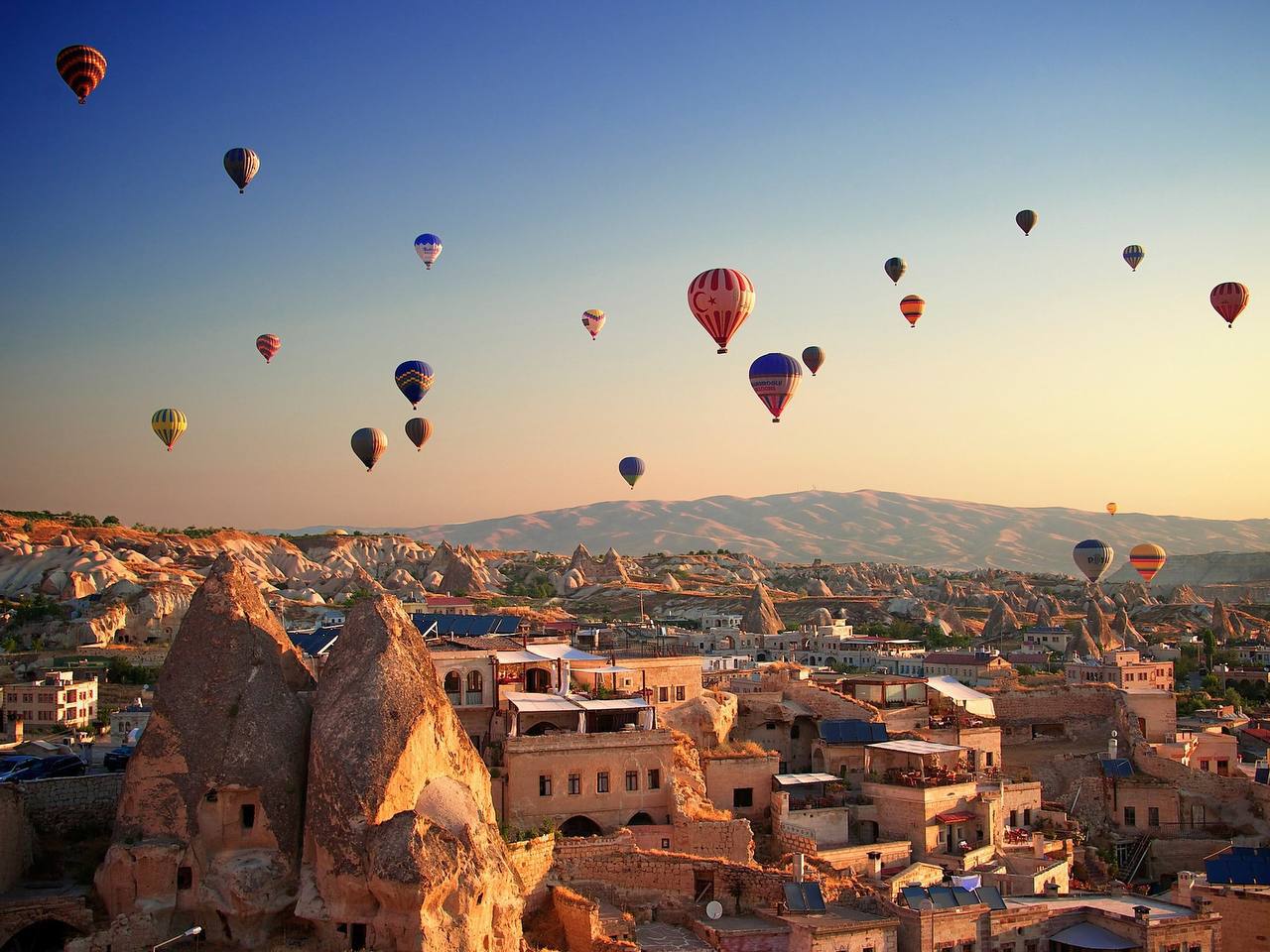
Cappadocia occupies a category entirely its own. The landscape formed by volcanic eruptions millions of years ago and eroded over millennia into the famous fairy chimneys and soft-rock valleys was inhabited continuously from the Hittite period through the Byzantine era, leaving behind a remarkable archaeological record. The Göreme Open Air Museum, a UNESCO World Heritage Site, contains rock-cut churches decorated with Byzantine frescoes dating from the 10th to 13th centuries. The underground cities of Derinkuyu and Kaymakli, meanwhile, descend multiple storeys into the earth and housed thousands of residents who retreated underground during periods of invasion and persecution.
From a practical standpoint, Cappadocia requires at least two nights to do it justice ideally in a cave hotel, which combines the atmospheric setting with genuinely comfortable accommodation. The balloon flights at sunrise are heavily marketed, and for good reason: drifting over the rose and love valleys in the early morning light is a legitimately memorable experience. Book balloon operators carefully, though. There are significant differences in safety standards and professionalism between licensed, well-reviewed operators and cheaper alternatives, and this is not an area where price should be the primary factor.
Structuring a Cultural Itinerary: Sequencing and Pacing
One of the most common mistakes I see cultural travellers make when researching Turkey independently is building an itinerary that looks balanced on paper but is logistically gruelling in practice. Turkey is geographically large. Istanbul to Cappadocia is roughly 750 kilometres. Cappadocia to the Aegean coast is another 600 kilometres. Attempting to connect these regions by road within a standard two-week holiday means spending a disproportionate amount of time in transit rather than at the sites themselves. The practical solution for multi-city cultural itineraries is to incorporate domestic flights Turkish Airlines and Pegasus operate frequent, affordable connections between Istanbul, Kayseri (the gateway to Cappadocia), and İzmir (for the Aegean ruins) and to build the itinerary around these flight connections from the outset rather than as an afterthought.
This is exactly the kind of logistical thinking that an experienced agency applies during the planning stage. At Al Kareem Travel, itinerary sequencing for cultural clients is built around minimising transit time and maximising time at the destinations themselves, a seemingly obvious principle that is, in practice, frequently overlooked when clients attempt to coordinate multiple components independently across different booking platforms.
Seasonal Timing for Cultural Travel
For historic city travel specifically, the shoulder seasons April through May and September through October are significantly preferable to the peak summer months. Most of Turkey’s major archaeological sites are exposed and offer limited shade, which makes July and August visits to Ephesus or Pergamon genuinely uncomfortable for extended periods. The spring and autumn months bring manageable temperatures, reduced crowds at the most popular sites, and accommodation rates that are noticeably lower than summer peaks. Spring in Cappadocia is particularly appealing; the valleys are green, balloon flights are frequent, and the light across the landscape in the early morning is exceptional.
Winter deserves a mention for Istanbul specifically. I find myself recommending a winter visit to the city more often than clients initially expect, and the response is almost universally positive. The museum queues at Topkapi and the Basilica Cistern are dramatically shorter, the covered bazaars feel more authentic with local rather than tourist foot traffic, and the city’s food scene is always strong and is at its most welcoming during the colder months when locals eat out regularly. For cultural travellers, it’s worth serious consideration.
What to Expect From a Well-Structured Cultural Package
Quality Turkey Holiday Packages focused on historic and cultural travel should include several components beyond flights and accommodation. Licensed local guides at major archaeological sites are worth paying for at Ephesus especially, the difference in experience between a guided and unguided visit is substantial. Private or small-group guiding is preferable to large coach tours, which tend to prioritise schedule over depth. Airport transfers and inter-city transportation should be clearly included, not left for the client to arrange on arrival. Travel insurance with adequate medical cover and trip cancellation protection should be explicitly confirmed, not assumed.
Accommodation choices for cultural itineraries should reflect the destination’s character where possible. In Istanbul, a boutique property in Sultanahmet or the Beyoglu district places you within walking distance of the major sites and within the atmospheric older fabric of the city. In Cappadocia, a cave hotel is the obvious recommendation and a practical one, since many are built directly into the rock formations and offer a level of character that standard hotel rooms simply can’t replicate. In Selçuk or İzmir, proximity to the Ephesus site and a quiet, well-reviewed property matters far more than brand recognition.
Budgeting Honestly and Avoiding Common Pitfalls
A realistic budget for a 10 to 12-night cultural itinerary through Istanbul, Cappadocia, and the Aegean coast including international flights, domestic connections, accommodation at a comfortable three-to-four-star level, guided site visits, and transfers typically falls between $2,000 and $3,500 per person depending on origin, season, and accommodation category. This is meaningfully better value than a comparable cultural circuit through Western Europe, but it’s not the bargain-basement trip that some early online research might suggest.
The most frequent agency-side mistake in cultural travel planning is underallocating time at sites in order to fit more destinations into the itinerary. Seeing fifteen cities in twelve days sounds comprehensive; it produces a trip where the traveller remembers very little clearly and feels they’ve been processed through a conveyor belt of monuments. Depth beats breadth in cultural travel, almost without exception. A well-designed Turkey holiday package should be honest with clients about this from the outset even if it means recommending a shorter destination list.
Conclusion
Turkey’s historic cities are not just backdrops for photographs, they are living documents of civilisations that shaped the world we live in. Experiencing them properly requires time, sequencing, the right guides, and an itinerary built around depth rather than coverage. The best Turkey Holiday Packages for cultural travel are the ones that take this seriously from the first planning conversation: that ask what you want to understand, not just what you want to see, and that build the logistics around making that possible.
Whether Ephesus, Istanbul, or the painted cave churches of Cappadocia draws you first, Turkey has the historical range to satisfy the most serious cultural traveller across multiple visits. Plan it well, give it the time it deserves, and it will almost certainly rank among the most intellectually and visually rewarding trips you’ve taken.