
In the ever-evolving landscape of American fashion, few brands have managed to maintain mystery, innovation, and cultural relevance quite like Comme des Garçons. Founded by visionary Japanese designer Rei Kawakubo in 1969, the label has consistently challenged traditional ideas of beauty, comm des garcons structure, and wearability. Over the decades, it has transformed from an avant-garde Paris runway favorite into a dominant force in American streetwear culture.
While Comme des Garçons originally gained recognition in the fashion capitals of Paris and Tokyo, its influence in America has grown dramatically in recent years. From New York’s fashion districts to Los Angeles street culture, the brand has become a staple among creatives, celebrities, and fashion-forward youth seeking individuality and artistic expression.
The Evolution of Comme Des Garçons in the American Market
The American fashion market has always appreciated bold reinvention, and Comme des Garçons fits seamlessly into that narrative. When the brand first appeared in the United States during the 1980s, its dark palettes, deconstructed silhouettes, and asymmetrical cuts were considered radical. Critics described it as anti-fashion, yet that very rebellion made it appealing to a niche audience.
Over time, American consumers grew more receptive to experimental design. As streetwear began merging with high fashion in the 2000s, Comme des Garçons found new momentum. The rise of fashion-conscious millennials and Gen Z shoppers fueled demand for labels that offered more than logos. They wanted stories, meaning, and artistic credibility — and Comme des Garçons delivered exactly that.
Today, the brand enjoys strong visibility in major cities such as New York, Los Angeles, and Chicago. High-end department stores, luxury boutiques, and concept shops frequently stock its collections, and resale platforms report consistent demand for both classic and limited-edition pieces.
The Popularity of Comme Des Garçons PLAY
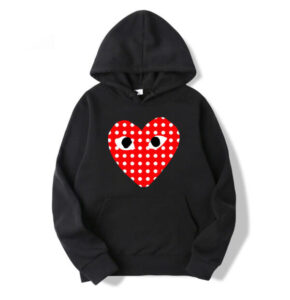
One of the biggest drivers of the brand’s American popularity is its sub-label, Comme des Garçons PLAY. Recognizable by its iconic heart logo with eyes, designed by Polish artist Filip Pagowski, PLAY has become a streetwear phenomenon.
Unlike the main Comme des Garçons runway collections, which often feature conceptual and dramatic designs, PLAY offers accessible basics such as T-shirts, hoodies, and sneakers. This accessibility has allowed a wider demographic to connect with the brand without sacrificing its artistic edge. In America, the heart logo is now instantly recognizable, especially among college students and young professionals who value subtle luxury.
Collaborations have also fueled PLAY’s success. Partnerships with brands like Converse created limited-edition sneakers that blend minimalism with playful branding. These collaborations frequently sell out, further cementing the label’s cult status in the United States.
Celebrity Influence and Cultural Impact
American celebrities and influencers have significantly contributed to Comme des Garçons’ trending status. Musicians, actors, and fashion icons are often photographed wearing both runway pieces and PLAY essentials. The brand’s association with creative freedom resonates deeply within entertainment and artistic communities.
Artists in hip-hop and alternative music scenes frequently embrace Comme des Garçons because it aligns with themes of nonconformity and authenticity. Its layered silhouettes and unconventional tailoring stand apart from mainstream designer logos, offering a more intellectual approach to fashion.
Social media platforms have amplified this influence. Instagram and TikTok fashion creators regularly style Comme des Garçons items in innovative ways, mixing them with vintage denim, luxury accessories, and contemporary sneakers. This organic exposure has introduced the brand to a younger American audience who view fashion as a form of storytelling.
High Fashion Meets Streetwear in America
The blending of high fashion and streetwear is one of the most significant trends shaping American style today, and Comme des Garçons sits at the center of that movement. The brand’s ability to operate in both worlds makes it unique. On one hand, its Paris Fashion Week runway shows present sculptural garments that challenge conventional design. On the other, its collaborative sneakers and logo tees thrive in everyday urban environments.
Retailers across the United States have recognized this dual appeal. Luxury department stores carry the more experimental lines, while streetwear boutiques focus on PLAY and collaborative capsules. This multi-layered distribution strategy has helped maintain exclusivity while expanding reach.
Moreover, the resale culture in America has further elevated the brand’s status. Limited drops and special-edition pieces often appreciate in value, making them desirable collectibles. Fashion enthusiasts view owning Comme des Garçons as both a stylistic choice and an investment.
The Role of Dover Street Market in American Expansion
A crucial component of Comme des Garçons’ American growth is Dover Street Market New York. Conceptualized by Rei Kawakubo, Dover Street Market redefines retail as an artistic experience rather than a traditional shopping environment. The New York location serves as a cultural hub where fashion, art, and design intersect.
Inside Dover Street Market, shoppers encounter curated installations, rotating designer spaces, and exclusive releases. This immersive experience reinforces the brand’s avant-garde identity while fostering community engagement. American consumers increasingly seek experiential retail, and Dover Street Market delivers that in a way few competitors can replicate.
The store’s presence in New York has also strengthened the brand’s credibility among American tastemakers. It positions Comme des Garçons not merely as a clothing label but as a curator of global creativity.
Why Comme Des Garçons Continues to Trend in America
Several factors explain why Comme des Garçons remains trending in the United States. First, its commitment to innovation ensures that it never feels stagnant. Each season brings unexpected silhouettes, textures, and themes that spark conversation.
Second, the brand balances exclusivity with accessibility. While its runway pieces maintain high-fashion prestige, PLAY and collaborations provide entry points for everyday consumers. This layered approach broadens its appeal without diluting its identity.
Third, American fashion culture increasingly values individuality. As consumers move away from overt branding and fast fashion, they gravitate toward labels that represent depth and artistic integrity. Comme des Garçons embodies those qualities.
Finally, the brand’s founder continues to influence the global fashion conversation. Rei Kawakubo’s dedication to pushing boundaries ensures that Comme des Garçons remains ahead of trends rather than following them.
The Future of Comme Des Garçons in the United States
Looking ahead, Comme des Garçons shows no signs of slowing down in America. The continued growth of street-luxury fashion, CDG Gold Heart Tee combined with consumer appreciation for experimental design, creates fertile ground for expansion. Future collaborations, innovative retail concepts, and evolving digital engagement strategies will likely keep the brand at the forefront of American style.
As younger generations increasingly prioritize authenticity and creativity, Comme des Garçons is perfectly positioned to thrive. Its fusion of art, rebellion, and wearable design ensures that it will remain more than just a trend. In the American fashion landscape, it stands as a symbol of fearless expression and enduring innovation.