
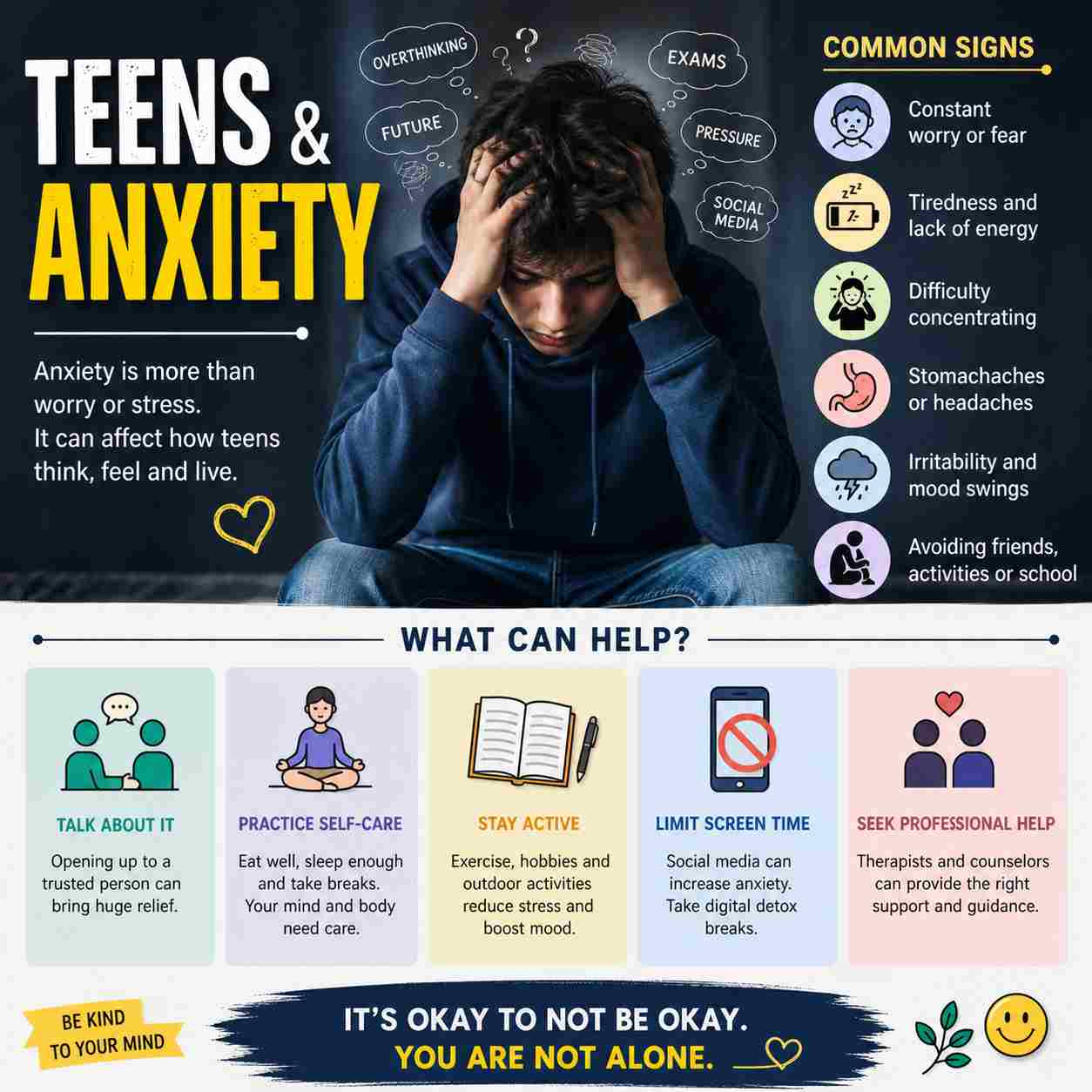
You might notice anxiety showing up as school avoidance, sudden irritability, or constant worry about fitting in. When it comes to teens and anxiety, these signs can be easy to miss or dismiss, but understanding them early makes a real difference. If you want clear ways to spot what’s normal and when anxiety needs help, this article gives practical signs and straightforward strategies you can use right away.
You’ll learn how teenage anxiety differs from childhood worry, what triggers it now, and concrete coping steps that work at home and at school. Expect evidence-based tips for calming the mind, improving focus, and building reliable support so you can act with confidence.
Understanding Adolescent Emotional Challenges
You may notice sudden shifts in mood, concentration, or behavior that affect daily routines, relationships, and schoolwork. Recognizing specific symptoms, typical triggers for teens, and how anxiety shows up in academic and social settings helps you act earlier and more effectively.
Common Symptoms and Warning Signs
Watch for persistent worry that interferes with activities, not just occasional nervousness. That can look like constant rumination about tests, safety, social acceptance, or future plans.
Physical signs often accompany anxiety: headaches, stomachaches, rapid heartbeat, sweating, or sleep problems. Those symptoms without a clear medical cause suggest emotional distress.
Behavioral changes matter. You might see avoidance (skipping classes, canceling plans), increased irritability, clinginess, or sudden perfectionism. Declines in hygiene, appetite shifts, or substance use can also be warning signs.
Cognitive and academic indicators include trouble concentrating, blanking on exams, or persistent negative self-talk. If worry causes frequent school absences or repeated requests for reassurance, treat that as significant.
Causes and Triggers Specific to Younger People
Adolescence brings brain changes that heighten emotional reactivity and risk-taking. The prefrontal cortex (decision-making) matures later than emotional centers, making teens more sensitive to stress and peer influence.
Social pressure from peers and social media intensifies fears about belonging and reputation. You may feel constant comparison, cyberbullying risk, or pressure to present a perfect image online.
Academic demands and future uncertainty create performance-related anxiety. High-stakes testing, college admissions, and unclear career paths add chronic stress.
Family dynamics and adverse experiences—conflict, instability, neglect, or abuse—raise vulnerability. Exposure to community violence, poverty, or discrimination also increases chronic worry and hypervigilance.
Impact on School Performance and Social Life
Anxiety reduces working memory and attention, making learning and test-taking harder. You might study more hours but retain less, leading to frustration and declining grades.
Avoidance behaviors shrink opportunities for skill-building and support. Missing classes or withdrawing from group projects erodes academic progress and teacher relationships.
Socially, anxiety can cause isolation or clinginess. You may pull away from friends to avoid judgment, or you may rely excessively on a single friend, which strains relationships.
Peer problems and academic stress feed each other. Poor grades can increase worry about future prospects, while social rejection magnifies self-doubt and avoidance, creating a cycle that’s hard to break.
Approaches for Coping and Support
You can use a mix of professional treatment, daily self-help skills, and clear support from adults to reduce symptoms and regain routine. Each approach targets different needs: symptom reduction, daily functioning, and a safer environment at home and school.
Therapeutic Interventions and Counseling
Therapy often centers on evidence-based approaches like cognitive-behavioral therapy (CBT), which teaches you to identify anxious thoughts and test them with experiments. Expect structured sessions that include exposure tasks for specific fears, skills training for problem-solving, and homework to practice outside sessions.
Medication may be appropriate for moderate to severe anxiety or when therapy alone isn’t enough. Common options include SSRIs; these require monitoring for side effects and regular follow-ups with a prescriber. Ask about expected benefits, timeline, and how medication integrates with therapy.
Look for therapists with teen experience and training in adolescent development. If access is limited, consider school counselors, teletherapy, or group programs that teach coping skills and peer support. Track progress with simple measures (mood logs, symptom checklists) to know when to adjust care.
Self-Help Strategies for Daily Management
Build a routine that stabilizes sleep, meals, and activity; regular sleep and movement reduce baseline anxiety. Aim for consistent bed and wake times, 30–60 minutes of moderate activity most days, and balanced meals to avoid blood-sugar dips that worsen anxiety.
Practice quick, evidence-backed techniques: diaphragmatic breathing for acute panic, 5-4-3-2-1 grounding for dissociation, and brief progressive muscle relaxation before bedtime. Use apps or timers to prompt practice until skills become automatic.
Limit caffeine, energy drinks, and excessive social media scrolling, which can amplify worry and comparison. Set concrete limits—no screens 60 minutes before bed, and two social-media-free hours after school—to improve mood and focus. Keep a short worry journal: write the worry, a realistic likelihood, and one action you can take.
Role of Parents and Educators
You provide structure, modeling, and safe opportunities to face fears. Stay calm and consistent: respond to anxious statements with brief validation (“That sounds hard”) and then offer a small next step rather than reassurance that avoids the trigger.
Create specific, supportive routines at home: shared nightly check-ins of 10 minutes, predictable homework times, and agreed strategies for big events (e.g., a script for attending a school presentation). Communicate with teachers about accommodations like extra time, a quiet space, or gradual exposure to crowded activities.
Encourage independence with graded challenges—start with manageable tasks and increase difficulty as confidence grows. Praise effort and concrete progress (e.g., “You stayed for the group today; that took courage”) rather than labeling. When needed, coordinate care: share observations with the therapist and school so everyone uses consistent strategies.