
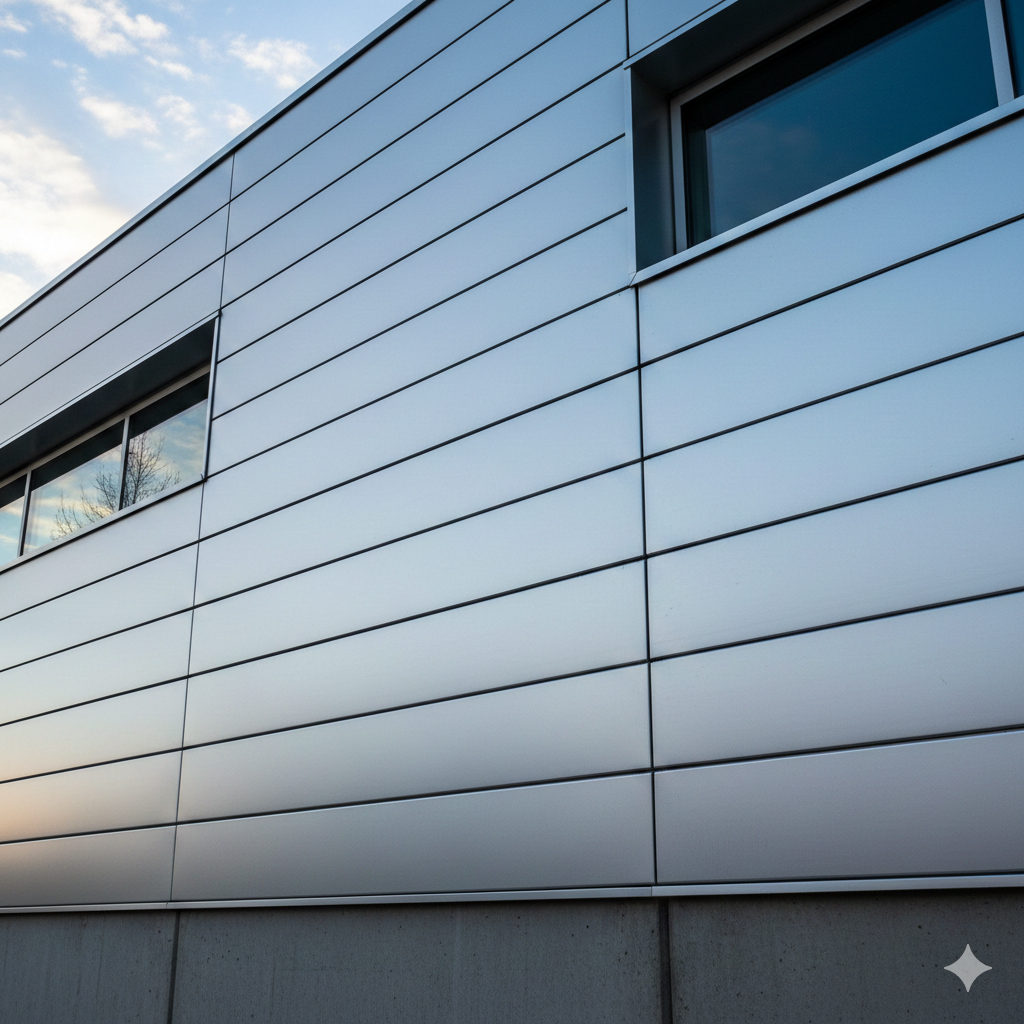
You want a supplier who delivers durable, code-compliant aluminum cladding on time and within budget. Choose a Aluminum Cladding supplier that combines tested materials, clear installation guidance, and local fabrication or installation services so you get consistent quality and fewer surprises.
This article walks through how to evaluate suppliers, compare ACM and other aluminum cladding products, and spot differences in fabrication, finishes, and warranties so you can make a practical decision for your project. Expect actionable criteria and real-world tradeoffs to help you short‑list suppliers and clarify what matters most for performance, cost, and appearance.
Choosing an Aluminum Cladding Supplier
Focus on supplier experience with the specific panel type you need, verified quality controls, and logistical capacity to deliver on your schedule. Prioritize measurable credentials, traceable material data, and warranties that match your project’s risk profile.
Key Qualities of Reputable Suppliers
Look for suppliers who supply the exact product family you require (solid aluminum, composite ACP, or prefinished rainscreen panels) and can show project references for similar building types and exposure conditions. Ask for documented job sheets that list alloy spec, coating system, and fabrication tolerances.
Evaluate fabrication capabilities: in-house CNC routing, press-brake bending, and factory-prefinished coating yield tighter tolerances and faster lead times. Confirm on-site support options — shop drawings, mock-up panels, and field technical assistance — so you avoid fit or performance issues during installation.
Request warranty terms in writing, including coverage for finish fade, delamination, and waterproofing interfaces. A supplier that provides performance testing (salt spray, accelerated UV, fire classification) demonstrates accountability.
Certifications and Standards Compliance
Verify compliance with relevant standards: ASTM (e.g., corrosion and mechanical tests), EN for European projects, and local building codes for fire performance (e.g., NFPA 285, BS 8414, or your jurisdiction’s requirements). Ask the supplier to provide test reports and the specific test dates, not just certificate summaries.
Confirm coating system credentials: PVDF or polyester baked coatings should have documented film thickness, cross-cut adhesion, and color fastness results. For ACM panels, request core material certification and fire-rating documentation tied to the exact panel model you plan to use.
Check ISO 9001 or equivalent quality management system records to ensure consistent production controls. If sustainability matters for your project, request recycled-content statements and VOC data for adhesives and coatings.
Supplier Location and Distribution Reach
Choose a supplier whose manufacturing or distribution footprint matches your logistical needs. Local or regional plants reduce freight costs, lead times, and the risk of damage during transit. For phased builds or multiple sites, a supplier with multiple warehouses can offer staggered deliveries and inventory staging.
Assess import risks if considering overseas manufacturers: customs clearance time, duties, and potential delays can affect project schedules. Confirm the supplier’s freight partners and damage claims process, and ask whether they provide on-site delivery tracking and skid protection.
Finally, verify spare-part and spare-panel availability after handover. A supplier with retained stock or quick remanufacture capability helps you address repairs or expansion without long waits.
Comparing Aluminum Cladding Products
You need clear criteria to judge panels: product types, how much a supplier will tailor them, and the strength of warranties and service. Focus on material construction, finish options, dimensional capabilities, lead times, and support commitments.
Variety of Cladding Options Offered
Look for suppliers that list specific product types: solid aluminum sheets, aluminum composite material (ACM/ACP), perforated panels, and rain-screen systems. Each type differs in thickness, core material, and permitted span; for example, ACM often uses 3–6 mm face sheets with a polymer core and suits large-format façades, while solid aluminum works well for lightweight trim and curved elements.
Check available finishes and coatings: PVDF, PVF, anodized, and powder-coat systems vary in durability and color retention. Ask for technical sheets showing film thickness (µm/mils), scratch resistance, and accelerated weathering test results (e.g., ASTM D4587 or ISO 11507). Confirm standard panel sizes, maximum panel length, and available edge profiles to see if they match your project geometry.
Also verify accessory offerings: subframe brackets, concealed fasteners, trims, and perimeter flashings. A supplier that bundles compatible brackets and thermal breaks reduces coordination risk and change orders.
Customization Capabilities
Determine how far the supplier will go with custom sizes, perforation patterns, and radii. Suppliers with in-house CNC routing, roll forming, and bending lines typically handle bespoke panel geometries and tight tolerances better than brokers.
Ask about color-matching processes and whether they provide certified color batches with batch traceability. Confirm nominal lead times for custom runs, minimum order quantities, and any additional setup or tooling fees. Request samples or mockups produced under production conditions so you can validate finish, curvature, and joint fit-up.
Check whether the supplier performs preassembly (e.g., cassette panels with integrated thermal breaks) and whether they supply sealed test panels for water and air infiltration. That capability shortens on-site assembly time and reduces field adjustments.
Warranty and After-Sales Support
Review warranty scope and the written terms: coating warranty years, substrate corrosion coverage, and limitations for coastal or industrial environments. Look for explicit disclaimers about exposure conditions and required maintenance to keep warranties valid.
Confirm who handles claims, response times, and whether on-site inspections are included. Prefer suppliers that provide installation guidance, certified installer lists, and post-installation inspections. Ask if they keep replacement panels in stock or offer expedited remakes for damage repairs.
Finally, get documentation on quality control procedures, factory test reports, and contact points for technical support. A supplier that offers clear escalation paths and documented turnaround times reduces schedule risk and helps you manage defects efficiently.
 John Ryan