
You likely use copper every day — in wiring, electronics, plumbing, and the clean-energy tech powering electric vehicles and solar farms. Copper mining supplies the metal that keeps modern infrastructure running and will shape how quickly energy and transportation systems decarbonize.
This article walks you through how copper gets from ore to usable metal, why different mining methods matter for cost and environment, and how global supply and major producers influence prices and availability. Expect clear, practical explanations about extraction processes, the industry’s economic role, and what shifts in demand mean for your projects or investments.
Copper Mining Processes
You will encounter a sequence of activities from locating ore to producing refined copper, each with specific techniques, equipment, and environmental controls. Key steps include geological surveying, choosing open-pit or underground extraction, concentrating the ore, and smelting or leaching to produce cathodes.
Exploration and Discovery
You start with geological mapping, satellite imagery, and geophysical surveys to target prospective areas. Drill core sampling provides rock chemistry and grade data; assays determine copper content and byproducts like gold or molybdenum.
Use of 3D geological modeling lets you estimate ore body size and orientation. You evaluate cut-off grades, expected recovery rates, and strip ratio to decide economic viability. Permitting and baseline environmental studies—water, soil, and biodiversity surveys—begin early so you can meet regulatory and community requirements.
Extraction Methods
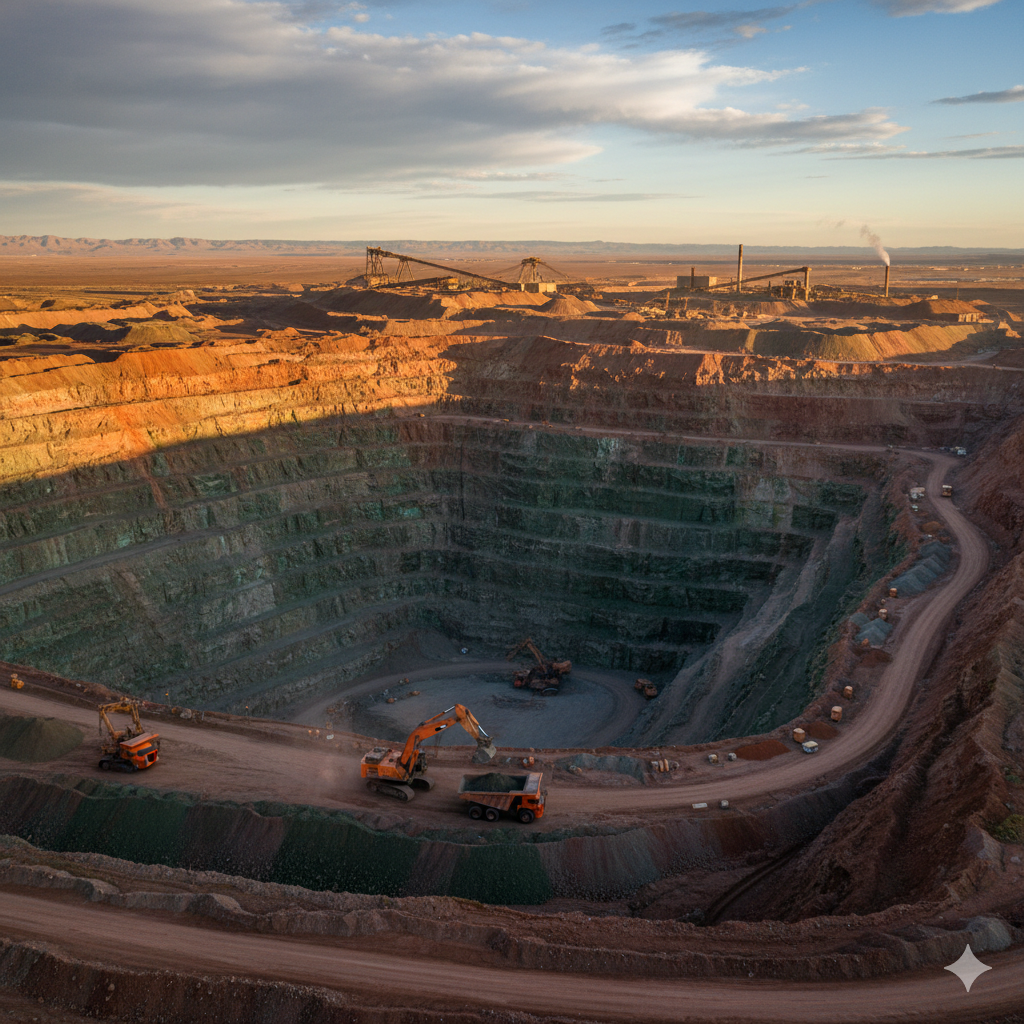
You choose open-pit mining when deposits lie near the surface and the strip ratio is reasonable. You will see drilling, blasting, loading with shovels or excavators, and hauling by large trucks to the crusher. Bench design, slope stability monitoring, and dust control are routine operational concerns.
For deeper, higher-grade deposits you use underground methods such as block caving or cut-and-fill. Ventilation, ground support, and ore transport systems (conveyors or trucks) are essential. Your decision hinges on cost per tonne, safety, ore geometry, and long-term mine planning.
Processing and Refinement
You first crush and grind ore to liberate copper minerals, then use froth flotation to produce a copper concentrate typically containing 20–30% copper. Concentrate goes to smelters or, for oxide ores, to hydrometallurgical leaching.
Smelting involves roasting, matte separation, and converting to produce blister copper, which you refine by fire refining and electrolytic refining to reach 99.99% purity cathodes. For oxide ores, you apply heap leaching with sulfuric acid, recover copper via solvent extraction, and electrowinning (SX-EW). Monitor reagent consumption, recovery rates, and concentrate quality throughout.
Environmental Considerations
You must manage tailings, waste rock, and water to prevent acid mine drainage and heavy-metal leaching. Tailings storage facilities require engineered liners, seepage collection, and ongoing monitoring to protect groundwater and downstream users. Progressive reclamation—reshaping, capping, and revegetation—reduces long-term liability.
Air emissions from smelting (SO2) and dust from mining need controls: scrubbers, baghouses, and dust suppression. Community engagement, closure planning with financial assurance, and continuous monitoring form part of regulatory compliance and social license to operate.
Economic and Industrial Impact
Copper drives construction, power networks, manufacturing, and technology supply chains. You will see how production shifts, country contributions, and specific industrial uses shape prices, jobs, and infrastructure planning.
Global Production Trends
Global copper production has grown with demand for electrification and infrastructure. You should note that mining output expanded particularly after 2000, with incremental increases from large open-pit mines and improved processing that raise recoverable metal per tonne of ore.
Prices and investment cycles matter for your planning. When prices rise, exploration and capacity expansion accelerate; when prices fall, marginal projects delay. Recycling contributes materially: scrap supply reduces dependence on new mine output and helps stabilize short-term availability.
Technology changes affect productivity. Automation, remote operations, and improved flotation and leaching techniques increase throughput and lower unit costs. Environmental and permitting timelines, however, can slow new mine development and constrain near-term supply growth.
Major Copper Producing Countries
Chile remains the largest producer, supplying roughly a quarter to a third of global mined copper. You should expect Chilean output to be dominated by large deposits and two of the world’s biggest mines, which heavily influence global supply balances.
Peru, the United States, and Congo (DRC) follow as significant producers, each supplying key amounts to global markets and adding regional price sensitivity. China is a major consumer and also a producer, but its primary role sits in processing and fabrication capacity.
Country-level risks affect your sourcing and investment decisions. Political stability, taxation, infrastructure quality, and regulatory regimes in these nations can alter project economics and timelines. Diversifying supply sources and tracking policy changes helps mitigate those risks.
Uses of Copper in Industry
Copper serves essential roles in electrical transmission, motors, and electronics because of its conductivity and durability. You should account for copper in power cables, transformers, electric vehicle motors, and renewable-energy systems where quantity per project can be substantial.
Construction and plumbing remain steady industrial markets; building wiring, roofing, and piping consume large, predictable volumes. In manufacturing, copper alloys (brass, bronze) support bearings, fasteners, and heat exchangers because of corrosion resistance and machinability.
Emerging demand centers on electrification and decarbonization. Grid upgrades, EV deployment, and wind/solar installations increase copper intensity per unit of energy delivered. Recycling and material substitution provide partial offsets, but the technical and economic fit of alternatives remains limited for many end uses.
- Key industrial uses:
- Power transmission and distribution
- Electric motors and EV components
- Building wiring and plumbing
- Electronics, connectors, and heat exchangers
 John Ryan