
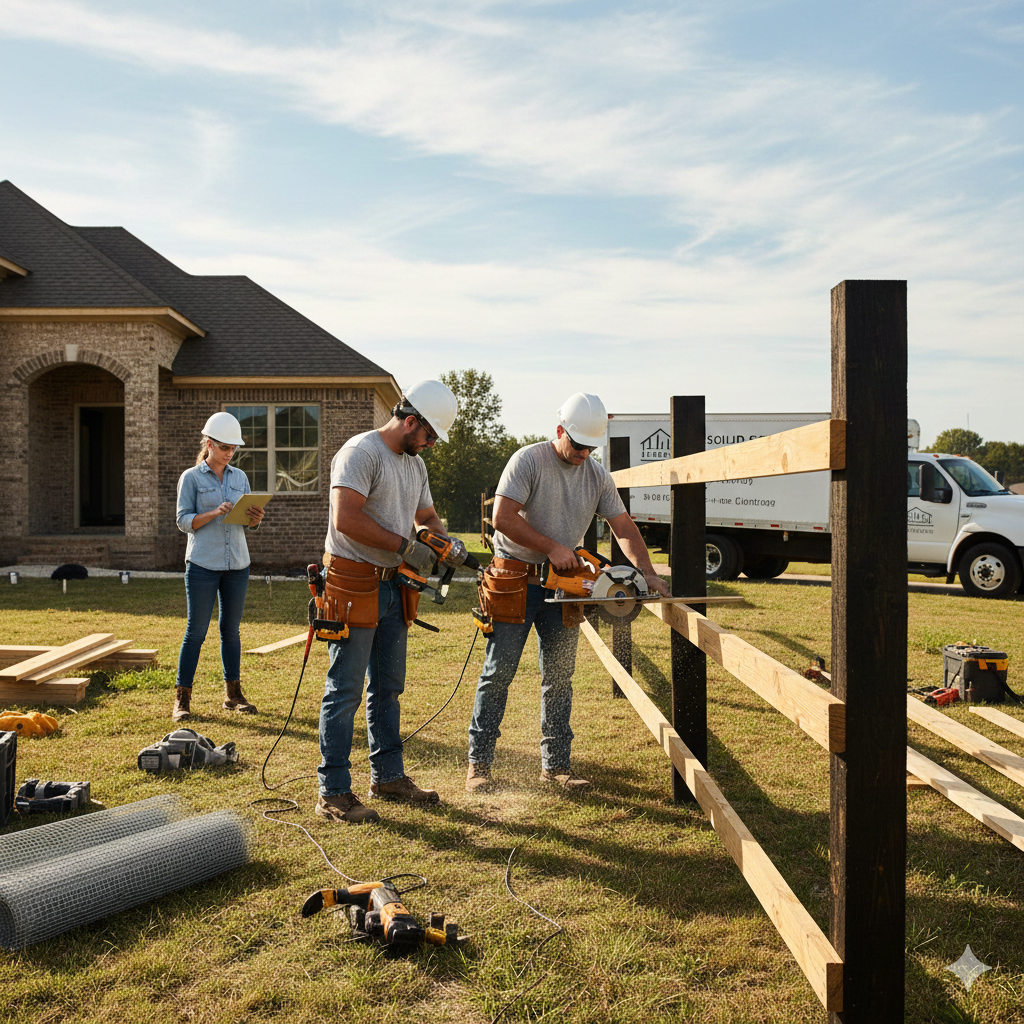
You want a fence that fits your property, budget, and long-term needs without surprises. A qualified fence contractor will assess your site, recommend the right materials and layout, secure permits if needed, and give a clear, written estimate so you know exactly what to expect.
As you weigh fence contractors, focus on experience with your chosen material, local permit knowledge, and transparent communication—those factors cut downtime and hidden costs. The rest of this article walks through how to choose the right pro and what to expect when you work with them so you can move forward confidently.
Choosing a Fence Contractor
You need a contractor who is licensed, insured, experienced with your fence material, and familiar with local codes and utility locating. Confirm these specifics, compare service details and warranty terms, inspect past work, and verify permit and setback handling before signing any contract.
Evaluating Contractor Credentials
Check state or local licensing requirements and confirm the contractor’s license number with the issuing agency. Ask for proof of general liability and workers’ compensation insurance; request current certificates that name you as the certificate holder if required.
Verify business registration and how long the company has operated in your area. Look for trade memberships (e.g., American Fence Association) and manufacturer certifications for the materials you want, such as treated-wood, vinyl, or ornamental steel.
Get a written estimate that lists labor, materials, removal/disposal, permitting, and cleanup. Confirm payment schedule limits and whether they provide a written contract with scope, timelines, and warranty details.
Comparing Fence Installation Services
Compare what each contractor includes: post setting depth, concrete footings, post spacing, rail and picket fastening methods, and hardware quality. Ask whether they use pressure-treated lumber, stainless hardware, galvanized fasteners, or polymer-coated chain-link to resist corrosion.
Request clear start and completion dates, a crew size estimate, daily work hours, and how they handle unexpected site issues like rock, roots, or grade changes. Confirm whether they handle site prep, stump removal, landscape restoration, and final cleanup.
Check warranty terms on labor and materials separately. Note exclusions such as ground movement, freeze-thaw damage, or homeowner-caused changes. Get warranty duration in writing and contact details for warranty service.
Assessing Previous Project Quality
Inspect recent jobs in person or via photo galleries. Look for straight, plumb posts; consistent post spacing; level rails; neat gate alignment; and properly compacted concrete footings. Poorly set posts, uneven pickets, and visible rot or rust are red flags.
Ask for references and contact past clients about schedule adherence, communication, cleanup, and whether issues were resolved promptly. Request at least three local references and compare how similar the previous projects are to your planned fence material and terrain.
Review online ratings and detailed reviews; focus on specific complaints about workmanship or follow-through rather than isolated scheduling issues. Request a written portfolio or project list with dates so you can verify longevity of work.
Understanding Local Regulations
Confirm setback, height, and material restrictions with your municipal planning or building department before work begins. Ask the contractor if they obtain required permits or if you need to apply; get permit costs and timelines in writing.
Use 811 or your local utility-locate service to ensure underground utilities are marked before digging. Verify who is responsible for property line disputes: get a recent survey and confirm whether the contractor will fence to the surveyed line or requires you to resolve boundaries first.
Check homeowner association rules for design, color, and height restrictions. If variances or approvals are needed, determine who prepares and submits the paperwork and whether permit pulls are included in the contract.
Working With a Fence Contractor
You’ll define scope, costs, and schedule during early conversations. Clear decisions about materials, property lines, and access prevent most delays and extra charges.
Project Planning and Consultation
Start by showing the contractor the exact fence line and any existing markers or survey pins. Ask them to perform or confirm a property-line survey if there’s any doubt; written confirmation of boundaries protects you from disputes.
Bring a list of required features: gate locations, latch types, post spacing, and preferred materials (e.g., pressure-treated wood, cedar, vinyl, or steel). Request written drawings or a simple site sketch that notes heights, breaks for slopes, and where utilities cross the line.
Clarify who will handle permits, homeowner association approvals, and locating underground utilities. Get the installer’s proof of insurance and references for similar projects before signing anything.
Cost Estimates and Budgeting
Request at least two detailed, written estimates that break out labor, materials, permit fees, and disposal. Compare unit prices (cost per linear foot) and itemized charges for posts, hardware, gates, and staining or sealing.
Watch for common cost drivers: uneven terrain, retaining walls, extensive clearing, or required surveys. Ask how change orders are priced and insist on a maximum-not-to-exceed line item for unexpected conditions.
Confirm payment schedule tied to milestones—deposit, post-setting, and final inspection—rather than time-based installments. Keep a contingency of 10–15% for unforeseen work, and retain the final payment until you’ve inspected the completed fence.
Timeline Expectations
Ask for a written start date and realistic completion window in business days, not calendar weeks, and include allowances for weather. Confirm daily work hours and whether crews work weekends.
Break the schedule into stages: site prep, post setting and curing (usually 24–48 hours for concrete), panel attachment, and finishing work. Expect post-setting to be the pace limiter; rushing concrete cure increases failure risk.
Agree on notification procedures for delays and on-site access needs. If you plan to be away during installation, provide a point of contact and specify gate codes or parking areas to avoid work stoppage.
 John Ryan