
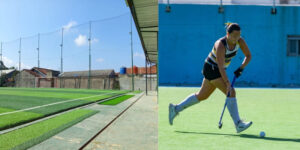
The development of sports infrastructure has changed significantly over the past few decades, especially in hockey. Traditional grass fields have largely been replaced by synthetic surfaces that provide better playing conditions and durability. Today, artificial turf has become the standard playing surface for professional hockey stadiums, training centers, schools, and sports academies.
A reliable Artificial hockey turf system ensures smooth ball movement, consistent speed, and improved player safety. Because of these advantages, the demand for advanced turf solutions has increased worldwide, particularly in countries like India where hockey remains one of the most popular sports.
A professional Hockey Turf Manufacturer plays a crucial role in creating high-performance sports fields that meet international standards. These manufacturers use advanced materials and engineering techniques to produce turf surfaces that are durable, weather-resistant, and capable of supporting both amateur and professional competitions.
What Is Artificial Hockey Turf?
Artificial hockey turf is a synthetic playing surface designed specifically for field hockey matches. Unlike natural grass, synthetic turf provides a smooth and even surface that allows the ball to roll consistently and players to move quickly without interruptions. The turf is made using synthetic fibers such as polyethylene or nylon, which are known for their strength, flexibility, and durability.
These fibers are carefully woven into a backing material and installed over a prepared base layer to create a stable playing field. The design ensures that players experience reliable traction and cushioning during fast movements. Because hockey is a fast-paced sport that requires precision and speed, artificial turf helps maintain consistent gameplay conditions throughout the match.
Why Artificial Turf Is Preferred for Hockey
Artificial hockey turf has become the preferred playing surface for professional tournaments and training facilities for several reasons. One of the most important benefits is the consistency of the playing surface. Natural grass fields often develop uneven patches that affect ball control and player movement. Synthetic turf eliminates this issue by offering a uniform and stable field.
Another major advantage is durability. A well-installed artificial turf field can withstand heavy usage for many years without losing its quality. This makes it ideal for stadiums, schools, and sports academies that host frequent matches and practice sessions. High-quality turf is designed to maintain its performance even after years of continuous play.
Artificial turf also reduces maintenance costs compared to natural grass fields. Grass surfaces require regular watering, mowing, fertilizing, and repair work. Synthetic hockey turf, on the other hand, requires minimal upkeep, which makes it a cost-effective option for sports facilities.
Key Features of Modern Hockey Turf
Modern artificial hockey turf systems are designed with several advanced features to enhance performance and safety. One important feature is the dense fiber structure, which helps maintain fast and accurate ball movement. The smooth surface ensures that passes travel evenly across the field, allowing players to execute precise strategies.
Another important feature is shock absorption. The base layers beneath the turf are engineered to absorb impact and reduce stress on players’ joints and muscles. This helps lower the risk of injuries during intense matches or training sessions.
Weather resistance is also a major benefit. Artificial hockey turf can withstand extreme temperatures, rain, and sunlight without losing its quality. Many modern turfs are UV-stabilized, which prevents fading or damage from prolonged exposure to sunlight.
Additionally, some advanced turf systems are water-based or sand-dressed to improve ball speed and player movement. These systems are designed to meet international sports standards and provide a professional playing experience.
Applications of Artificial Hockey Turf
Artificial hockey turf is widely used in various sports environments. Professional stadiums often install high-quality synthetic surfaces to meet international competition standards. These fields are designed to handle heavy usage and provide consistent performance during tournaments.
Educational institutions also benefit from artificial turf installations. Schools and universities often install hockey turf in their sports complexes to provide students with better training facilities. These fields allow young athletes to practice under professional conditions and improve their skills.
Sports clubs and training academies also rely on artificial turf surfaces for daily practice sessions. The durability of synthetic turf allows these facilities to host multiple matches and training programs without worrying about damage to the field.
The Role of a Hockey Turf Manufacturer
A professional Hockey Turf Manufacturer is responsible for designing, producing, and installing synthetic turf systems that meet the requirements of modern sports infrastructure. These manufacturers use high-quality materials and advanced production techniques to create durable and reliable turf surfaces.
Companies specializing in turf manufacturing often provide complete solutions, including site assessment, base preparation, turf installation, and maintenance support. Proper installation is crucial because the base layers and drainage systems play a key role in the performance and longevity of the turf field.
Manufacturers also work closely with sports organizations, schools, and stadium developers to design customized turf solutions that suit specific project requirements. This includes selecting the right fiber material, pile height, and field design to achieve optimal performance.
Benefits of Artificial Hockey Turf for Sports Facilities
One of the biggest advantages of artificial hockey turf is its long lifespan. High-quality turf systems can last for many years with proper care, making them a valuable investment for sports infrastructure projects.
Another benefit is year-round usability. Unlike natural grass fields that can become muddy or damaged during heavy rain, synthetic turf remains playable in most weather conditions. This ensures that matches and training sessions can continue without interruption.
Artificial turf also supports consistent gameplay. The uniform surface allows players to focus on their skills and strategies rather than worrying about uneven ground conditions. This improves the overall quality of the game and enhances the experience for both players and spectators.
Furthermore, modern turf manufacturing emphasizes sustainability. Many manufacturers are adopting environmentally friendly materials and production methods to reduce environmental impact while maintaining high performance standards.
Choosing the Right Artificial Hockey Turf
Selecting the right artificial hockey turf requires careful consideration of several factors. The quality of the turf fibers, the durability of the backing material, and the strength of the base layers all influence the performance of the field.
It is also important to work with an experienced Hockey Turf Manufacturer who can provide reliable products and professional installation services. A well-designed turf system not only improves gameplay but also reduces maintenance costs and extends the life of the sports facility.
Organizations planning to install hockey turf should evaluate factors such as field size, expected usage, climate conditions, and budget. With proper planning and expert guidance, it is possible to build a high-quality turf field that serves athletes for many years.
Conclusion
Artificial turf has transformed the way hockey is played and practiced around the world. Its ability to provide a smooth, durable, and low-maintenance playing surface makes it the ideal choice for modern sports facilities. A high-quality Artificial hockey turf system ensures consistent ball movement, enhanced player safety, and long-lasting performance.
Working with a trusted Hockey Turf Manufacturer like OSMS Turf ensures that sports complexes, schools, and stadiums receive reliable turf solutions tailored to their specific needs. As sports infrastructure continues to evolve, artificial hockey turf will remain an essential part of building world-class hockey fields that support athletes and promote the growth of the game.