
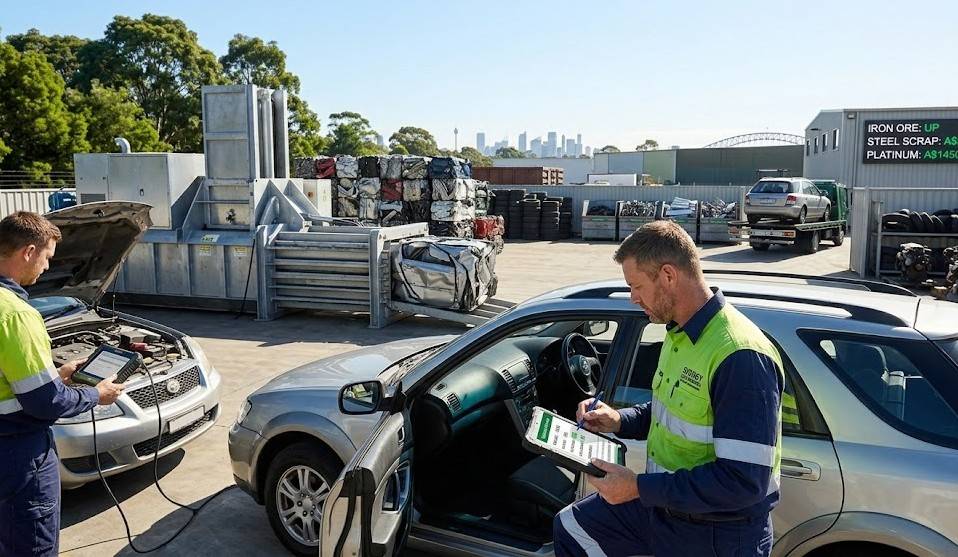
Professional car recyclers calculate your vehicle’s market value by analyzing the current spot price of scrap metal, the demand for reusable spare parts, and the specific weight of the car’s steel chassis. Unlike private buyers who focus on aesthetic appeal or drivability, professional wreckers evaluate a vehicle based on its intrinsic material worth and salvageable components. This data-driven approach ensures that even non-running or damaged vehicles receive a fair cash offer based on real-time industrial commodity rates in New South Wales.
Key Factors Determining Your Car’s Worth
The valuation of a scrap or used vehicle depends on 4 primary physical attributes: make and model, age, odometer reading, and overall structural condition. These metrics allow appraisers to determine whether a car is destined for the smelting furnace or the secondary parts market.
1. Vehicle Weight and Steel Content
The kerb weight of a vehicle is the most significant factor in a scrap-level valuation. Most passenger cars contain approximately 65% steel and iron. When the global demand for recycled steel rises, the “cash for cars” offers in Sydney increase proportionally. A heavy 4WD or a commercial van consistently fetches a higher price than a compact hatchback because it yields more metric tonnes of recyclable metal.
2. Make, Model, and Year of Manufacture
Specific vehicle models maintain higher values due to the popularity of their spare parts. Popular Australian vehicles, such as the Toyota Hilux, Ford Ranger, or Holden Commodore, often command premium prices because their components are in high demand at mechanical workshops. Newer models—even those involved in major accidents—contain advanced electronic modules and interior trims that hold significant resale value.
3. Current Odometer Reading
The mileage on a vehicle serves as a definitive indicator of the wear and tear on internal mechanical systems. Lower kilometres suggest that 3 critical assemblies—the engine, transmission, and differential—are likely in good condition for repurposing. Vehicles with over 300,000 kilometres are generally valued based on their metal weight rather than their mechanical potential.
4. Component Integrity and Completeness
A complete vehicle is worth more than a “shelled” car that is missing major parts. To receive a maximum valuation, a car must include 5 essential components:
-
The Catalytic Converter: Contains precious metals like platinum, palladium, and rhodium.
-
The Battery: High lead content makes it a valuable recyclable asset.
-
The Engine and Gearbox: Major units that drive the highest resale margins.
-
Alloy Wheels: Aluminium wheels are valued higher than standard steel rims.
-
Intact Tyres: Good tread depth adds incremental value for resale.
The Role of Market Commodities in Pricing
External economic factors directly influence the daily quotes provided by professional buyers. Because the automotive recycling industry is a subset of the global commodities market, prices fluctuate based on international trading.
| Commodity/Factor | Impact on Value | Industry Significance |
| HMS 1 & 2 Steel Prices | High | Dictates the base rate per tonne for the chassis. |
| Aluminium Spot Price | Medium | Affects the value of engine blocks and rims. |
| Platinum Group Metals | High | Determines the worth of the exhaust system. |
| Logistics/Fuel Costs | Low | Influences the cost of providing “free towing” services. |
Understanding Salvage Categories
Assessors classify vehicles into 3 distinct categories to determine the appropriate valuation method. Each category follows a different financial logic based on the ultimate destination of the vehicle.
Scrap Vehicles
Scrap vehicles are cars that are rusted, burnt out, or mechanically destroyed. These are valued purely by weight. If a car is 1.5 tonnes and the current scrap rate is $200 per tonne, the base value is $300.
Repairable Write-offs
These vehicles have sustained cosmetic or minor mechanical damage that makes them uneconomical for an insurance company to fix. However, for a wrecker, these cars are valuable sources for high-quality body panels, such as doors, bonnets, and guards.
Used Cars (Running)
If a vehicle is still roadworthy, appraisers evaluate it against the current Australian used car market. In these instances, the valuation exceeds the scrap metal price to reflect the vehicle’s utility and potential for resale at auction.
Pros and Cons of Professional Valuation
| Feature | Pros | Cons |
| Speed | Quotes are provided in 60 seconds or less. | Prices are non-negotiable once the metal rate is set. |
| Convenience | No need to clean or repair the car. | You do not get “sentimental value” pricing. |
| Legality | Full RMV/Service NSW paperwork is handled. | Value is lost if major parts are missing. |
| Financials | Instant payment via EFT or cheque. | Lower than a private sale for high-end luxury cars. |
Target Audience and Situational Relevance
The valuation model used by specialists is designed for specific groups of sellers who prioritize efficiency and environmental responsibility.
-
Deceased Estate Managers: Need to clear property quickly without the hassle of private inspections.
-
Apartment Dwellers: Residents in Sydney CBD or Parramatta who cannot store a non-running car in a shared basement.
-
Insurance Claimants: Owners who have received a payout but are left with a “salvage” vehicle they need to remove.
-
Environmentally Conscious Sellers: Individuals who want to ensure 100% of their car is recycled.
Situational relevance peaks during the “Rego” renewal period. Many Sydney residents find that the cost of a Pink Slip inspection and necessary repairs (e.g., new tyres, brake pads, and suspension bushes) exceeds the car’s value. In this situation, the most logical financial move is to convert the asset into cash immediately.
How to Prepare for an Accurate Valuation
To ensure the team provides the most precise figure, you should have 3 pieces of information ready:
-
The VIN (Vehicle Identification Number): This allows for verification of the exact build date and engine specs.
-
A Brief History of Damage: Transparency regarding “blown head gaskets” or “transmission slip” is essential.
-
Photos of the Interior: High-quality images of the seats and dash can increase a quote if the interior is pristine.
The Final Step: From Quote to Cash
Once you accept the calculated market value, the process moves into the logistics phase.
-
Step 1: You receive a formal offer via phone or email.
-
Step 2: A tow truck is dispatched to your location at a time that suits you.
-
Step 3: The driver performs a 5-minute visual inspection to confirm the car matches the description.
-
Step 4: You sign the transfer of disposal forms and receive your payment.
Ready to see what your car is worth? Contact Sydney Car Removal today for an obligation-free valuation based on current Sydney market rates.
visit: https://www.sydneycarremoval.com.au/